
The roofing industry operates in a unique environment characterized by project-based work, fluctuating material costs, weather-driven demand, seasonal revenue cycles, and significant investments in labor and equipment. While strong sales and production are critical, long-term success depends on disciplined financial management.
Roofing contractors must closely monitor job profitability, working capital, inventory, and revenue recognition to maintain healthy margins and cash flow. The following accounting considerations are particularly important for roofing companies.
1. Revenue Recognition
Proper revenue recognition is essential to accurately measure financial performance and ensure compliance with accounting standards.
Percentage-of-Completion Method (PCM)
For larger commercial or multi-month projects, revenue is often recognized over time using the percentage-of-completion method. Revenue and gross profit are recorded based on costs incurred relative to total estimated project costs.
Benefits:
- Provides a more accurate view of project profitability throughout the project lifecycle.
- Aligns revenue with work performed.
- Improves visibility into operational performance and forecasting.
Key Risk:
- Inaccurate project cost estimates can significantly distort reported revenue and profit.
Completed Contract Method
For smaller residential projects that are completed within a short timeframe, the completed contract method may be appropriate. Revenue and related costs are recognized only when the project is substantially complete.
Benefits:
- Simpler to administer.
- Can provide tax deferral benefits in certain situations.
- Reduces the impact of estimating inaccuracies on interim financial statements.
Key Risk:
- Financial results may fluctuate significantly between periods if large projects are completed near the period-end.
2. Job Costing and Cost of Goods Sold (COGS)
Effective job costing is one of the most important financial disciplines in the roofing industry. Each project should be treated as an individual profit center, with all direct costs tracked and analyzed.
Direct Materials
Material costs typically represent the largest project expense and should be tracked at the job level, including:
- Shingles and roofing systems
- Underlayment
- Flashing and accessories
- Fasteners and adhesives
- Disposal and dumpster costs
Monitoring waste factors and comparing actual costs against estimates helps improve bidding accuracy and protect margins.
Direct Labor
Accurate labor tracking should include:
- Crew hours by project
- Overtime costs
- Payroll taxes
- Workers’ compensation insurance
- Employee benefits
For subcontracted crews, labor should be assigned directly to jobs and reviewed regularly against project budgets.
Subcontractor Classification Risk
Many roofing companies utilize subcontractors; however, misclassifying workers as independent contractors when they should be treated as employees can create substantial risks, including:
- Payroll tax liabilities
- Workers’ compensation exposure
- Employment law violations
- Regulatory penalties and interest assessments
Periodic reviews of labor classifications can help mitigate compliance risk.
3. Inventory Management
Roofing materials are often high-value, subject to price volatility, and vulnerable to theft or weather-related damage. Effective inventory controls are essential to maintaining profitability.
Job-Pack Delivery vs. Warehouse Inventory
Many contractors utilize direct-to-job site deliveries to:
- Reduce storage costs
- Minimize material handling
- Improve inventory turnover
- Lower working capital requirements
However, maintaining limited warehouse inventory may be necessary to support emergency service work and protect against supply-chain disruptions.
Material Usage and Waste Tracking
Unused materials, returns, and scrap should be tracked carefully to ensure accurate job profitability reporting.
Best practices include:
- Documenting all material returns and credits.
- Assigning leftover materials to future jobs when appropriate.
- Monitoring waste percentages by crew and project type.
- Reconciling estimated versus actual material consumption.
Even small discrepancies can significantly impact gross margins across hundreds of projects annually.
4. Cash Flow Management
Many roofing companies experience cash flow challenges despite strong earnings. Profitability and cash flow are not always aligned.
Managing the Working Capital Gap
Roofing contractors often pay for materials and labor weeks before collecting final payment from customers. This creates a working capital gap that must be actively managed.
Common strategies include:
- Collecting deposits upon contract signing.
- Progress billing based on project milestones.
- Closely monitoring accounts receivable aging.
- Negotiating favorable vendor payment terms.
Maintaining sufficient liquidity is particularly important during periods of rapid growth when cash requirements increase significantly.
Seasonality and Reserve Planning
Weather patterns can create substantial swings in revenue and production volume.
Because many operating expenses remain fixed—including administrative payroll, facility costs, insurance, and software subscriptions—successful roofing companies build cash reserves during peak seasons to support operations during slower periods.
A proactive cash forecasting process can help management anticipate and address seasonal fluctuations before they become problems.
5. Fixed Assets and Equipment Management
Roofing operations rely heavily on vehicles, trailers, and specialized equipment. Maintaining accurate fixed asset records is critical for both operational and tax purposes.
Asset Tracking
Companies should maintain a comprehensive fixed asset register that includes:
- Pickup trucks and fleet vehicles
- Dump trailers
- Safety equipment
- Ladders and scaffolding
- Roofing tools and machinery
- Technology and field-service equipment
Regular asset reviews help identify underutilized equipment and support informed capital spending decisions.
Depreciation and Tax Planning
Tax provisions such as Section 179 and bonus depreciation may provide opportunities to accelerate deductions for qualifying equipment purchases.
While these incentives can reduce taxable income, equipment purchases should ultimately be driven by operational needs, return on investment, and long-term growth objectives—not solely by tax considerations.
Additional Key Metric: Backlog and Production Capacity
One of the most valuable indicators for roofing companies is backlog management.
Key metrics to track include:
- Contracted work not yet completed
- Average project duration
- Crew utilization rates
- Production capacity
Tracking these metrics helps management forecast revenue, schedule labor efficiently, and identify potential bottlenecks before they impact customer service or profitability.
Conclusion
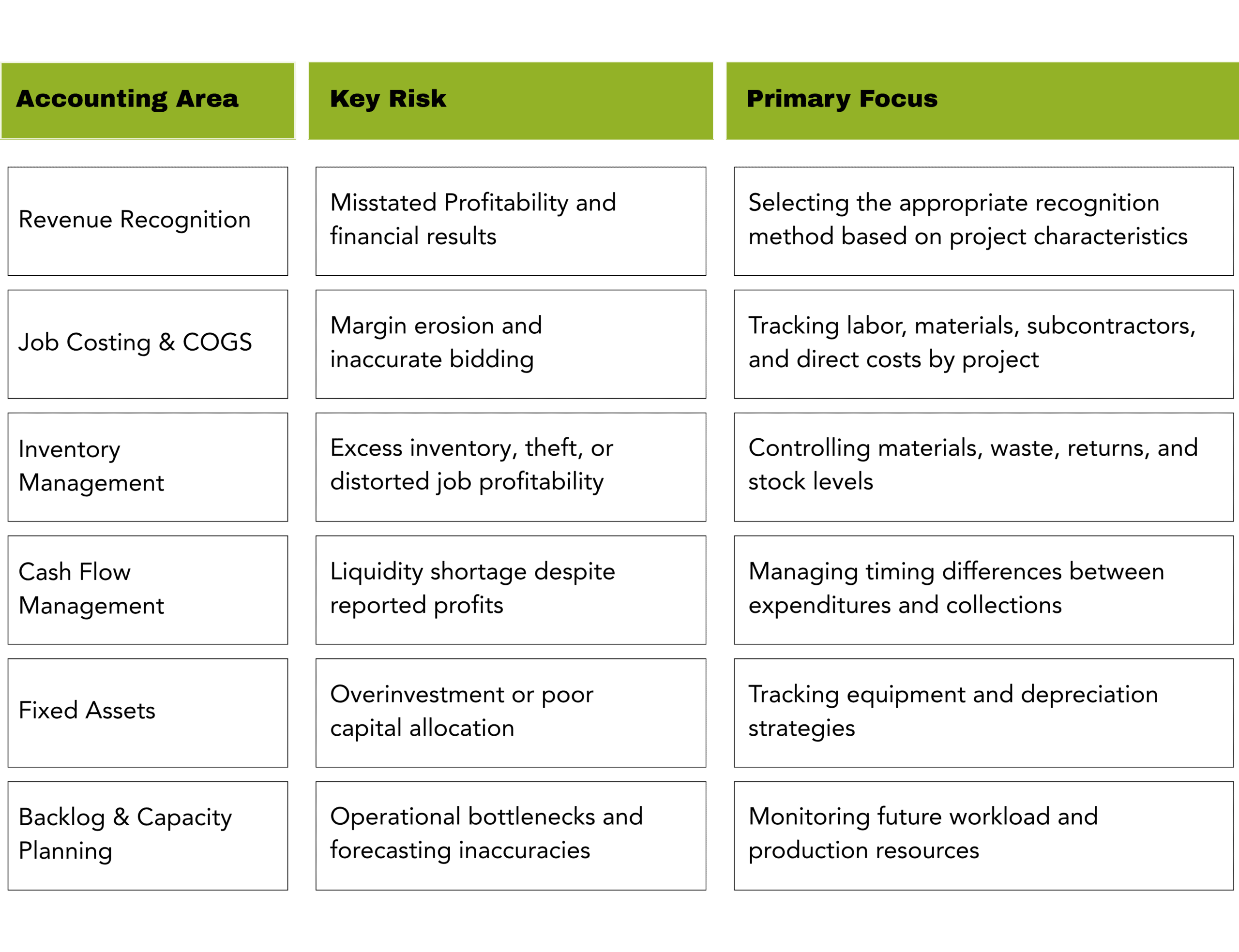
Strong accounting practices are a competitive advantage in the roofing industry. Companies that implement disciplined job costing, maintain visibility into cash flow, manage inventory effectively, and align financial reporting with operational performance are better positioned to improve profitability, scale sustainably, and navigate industry cycles with confidence.